


Call For a Consultation (305) 373-4400
Can Border Agents Search Your Phone After a Cruise or International Flight? What Travelers Need to Know
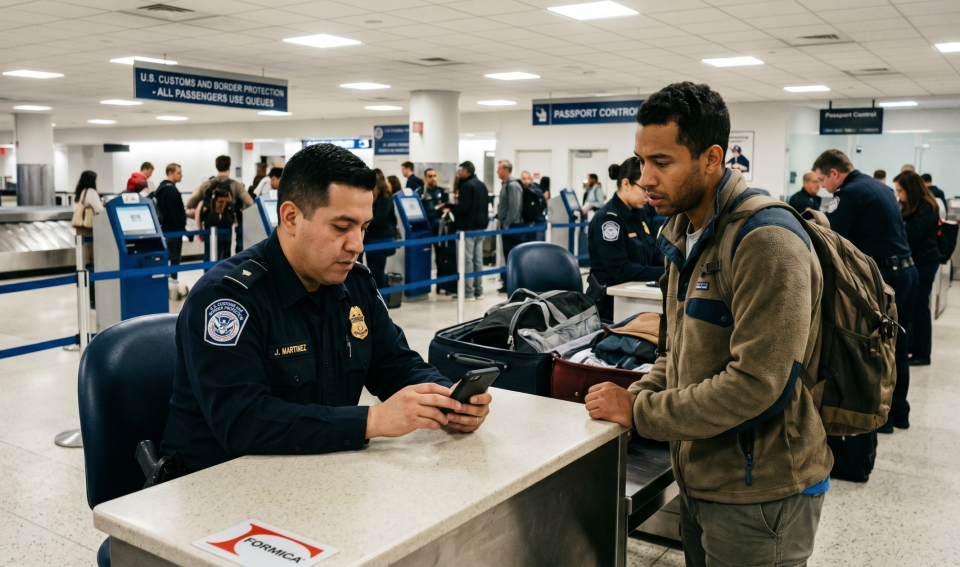
Executive Summary: Border agents have broad authority to search travelers at cruise ports and airports, including electronic devices in many cases. While basic phone searches may not require a warrant, the law is still evolving on password access and forensic searches. Enforcement is increasing, particularly for travelers returning from certain regions, with a focus on serious federal offenses. If stopped, your response matters and legal guidance should be your next step.
You step off a cruise ship or land at the airport after an international trip. You expect to go through customs, answer a few questions, and head home. Instead, you’re pulled aside. An agent asks for your phone. Then your password.
This is happening more often. And it’s not random.
Federal agents are focusing on travelers returning from certain countries and cruise routes. They’re looking for evidence tied to illegal activity overseas, including child exploitation offenses. Whether you did anything wrong or not, the situation can escalate quickly if you don’t understand your rights.
-
Why Are Border Searches Different?
At the U.S. border, including airports and cruise terminals, law enforcement has broader authority than they do inside the country.
Under federal law, agents with U.S. Customs and Border Protection (CBP) can search your luggage without a warrant or probable cause. This is called the border search exception.
That part is well established. What’s less clear is how far that authority goes when it comes to digital devices like phones and laptops.
-
Can They Search Your Phone?
Yes, but there are limits, and the law is still evolving.
Courts generally allow basic searches of electronic devices at the border without a warrant. A “basic search” usually means scrolling through content manually.
More invasive searches like forensic downloads or data extraction may require additional legal justification, depending on the jurisdiction. The key point:
- You may be asked to unlock your phone
- You may be asked to provide passwords
- You may be detained if you refuse
But you are not clearly required under all circumstances to provide your password. That’s where things get complicated.
-
Should You Give Your Password?
This is one of the most difficult decisions in the moment.
- If you refuse, agents may detain you longer or seize your device
- If you comply, you may be giving them access to everything on your phone
There is no one-size-fits-all answer. It depends on your situation, your immigration status, and what risk you may be trying to avoid.
What matters is this: you should understand that you do have rights, even at the border. But asserting them can come with immediate consequences.
-
Why Are These Searches Increasing?
There is a clear enforcement trend.
Federal authorities are focusing on travelers returning from regions associated with higher rates of illegal activity tied to exploitation. This includes parts of Southeast Asia and South America. Cruise travel is also getting attention because it involves international ports with less traditional screening on departure.
Agents are looking for:
- Illegal images or videos stored on devices
- Communications suggesting unlawful conduct abroad
- Evidence tied to exploitation or human -trafficking
These investigations often fall under federal statutes like:
- 18 U.S.C. § 2252 (possession of illegal images)
- 18 U.S.C. § 2423 (illegal sexual conduct abroad)
-
What Happens If They Find Something?
If agents believe they’ve found evidence of a crime, things move quickly.
Your device may be seized. You may be detained. The case may be referred to federal investigators. And at that point, you are no longer dealing with a routine border inspection. You are part of a criminal investigation.
Federal cases involving exploitation offenses carry severe penalties, including mandatory minimum prison sentences.
-
What Should You Do If You’re Stopped?
If you’re pulled aside for a secondary inspection:
- Stay calm and respectful
- Do not lie or provide false information
- Do not try to delete anything from your device
- Ask if you are being detained or are free to leave
- Do not answer detailed questions about your travel or devices without legal guidance
And most important: If the situation escalates beyond routine questioning, you need legal counsel immediately.
-
Why This Matters More Than Ever
Technology has changed how investigations happen. Your phone is not just a device. It’s a record of your communications, photos, locations, and contacts.
At the border, that record can be accessed in ways that wouldn’t be allowed elsewhere without a warrant. That’s why these searches are becoming a key tool for federal enforcement.
And once an issue is identified, it doesn’t stay at the border. It follows you.
Barry Wax gives people in trouble the ability to make the right choices and regain control of their lives. If you’ve been stopped at a port of entry, had your device searched, or are concerned about an investigation tied to international travel, call Barry.
FAQs
- Can border agents search my phone without a warrant?
In many cases, yes for basic searches. More advanced forensic searches may require additional legal justification depending on the court. - Do I have to give my phone password at the border?
The law is unsettled. You may refuse, but that could lead to detention or seizure of your device. - Can they keep my phone if I refuse to unlock it?
Yes. Agents may seize your device for further review and obtain a search warrant. - What types of crimes are they looking for?
A range of offenses, including financial crimes and serious federal offenses tied to exploitation or trafficking. - Should I answer questions about my trip?
Basic questions are expected, but detailed or incriminating questions should be handled with legal counsel. - What should I do if I think I’m under investigation after a search?
Contact a defense attorney immediately. Do not discuss the situation with others or attempt to explain it on your own.
Copyright © 2026 Law Offices of Barry M. Wax. All rights reserved.
Digital Marketing By 
*Images are obtained under license from Canva and other third-party stock image providers, with attribution included where required.