


Call For a Consultation (305) 373-4400
Winning in Court Doesn’t Mean It’s Over: Reinstating Your Professional License After a Criminal Case
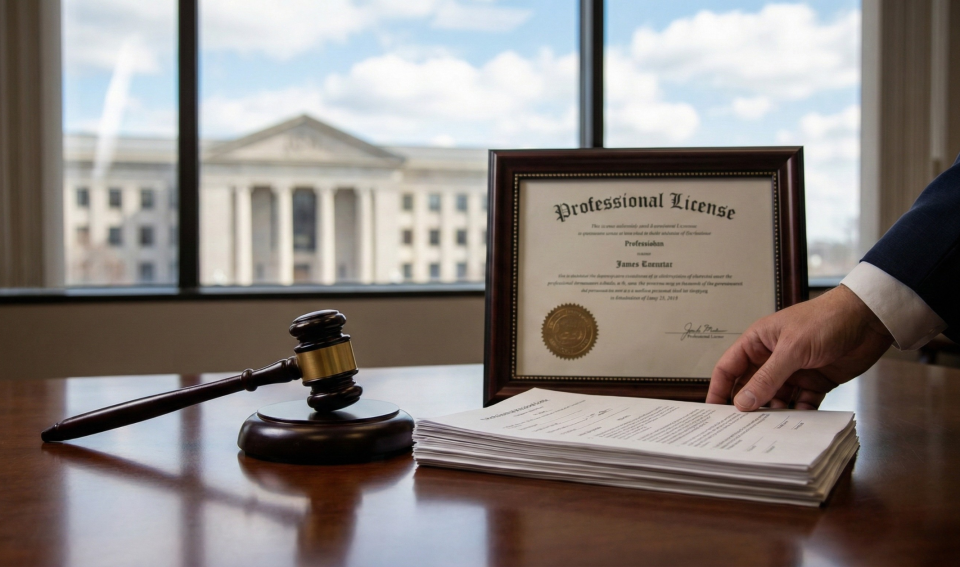
Executive Summary: Winning a criminal case doesn’t end the consequences for licensed professionals. In Florida, you must report findings of guilt to your licensing board within strict deadlines. Even without a conviction, arrests and complaints can trigger disciplinary actions. Reinstating a suspended license may require hearings, compliance steps, and evidence of rehabilitation. The legal and licensing sides of a case are separate, and both matter.
You fought your case. Maybe you won at trial. Maybe you took a plea and walked away with no conviction. Either way, you think it’s done. Then you get a letter from your licensing board and realize it’s not.
For licensed professionals in Florida, a criminal case is only part of the battle. The second fight—the one to keep or reinstate your professional license—can be just as critical. Whether you’re a doctor, lawyer, CPA, real estate broker, insurance adjuster, or teacher, the outcome of that second process may determine whether you get to continue in your profession.
This blog breaks down what you need to know if you’re dealing with licensing issues after a criminal case, even if you think the legal side is behind you.
-
Who Has to Report a Criminal Conviction?
In Florida, most licensed professionals are required to report a finding of guilt, whether by plea or jury verdict, within 30 days to their licensing agency. That includes:
- Medical professionals (Board of Medicine)
- Accountants (Board of Accountancy)
- Real estate agents (Florida Real Estate Commission)
- Insurance adjusters
- Teachers
- Many other license holders regulated by DBPR or DOH
Failing to report a conviction within the deadline can be treated as a separate violation, and it may trigger disciplinary action regardless of the severity of the original charge.
-
How the Florida Bar Is Different
Attorneys in Florida follow different rules.
-
- Felony Arrest: No reporting is required at the time of arrest. However…
- If Formal Felony Charges Are Filed: If a felony Information is filed, it must be reported to the Florida Bar within 10 days.
- If Adjudged Guilty of a Felony: A finding, determination or judgment of guilt to a felony must be reported within 10 days.
- Misdemeanors: No need to report unless there’s a court finding of guilt. A finding, determination or judgment of guilt must be reported within 10 days.
If the Florida Bar believes the charge affects your ability to practice, it can file a petition for interim suspension with the Florida Supreme Court, even before your case is resolved.
If you’re found guilty of any crime, you must report it. From there, disciplinary proceedings may begin.
-
What If You Weren’t Convicted?
A common misconception is that if your record stays clean—say, through a withhold of adjudication—you’re in the clear. Not true.
Even if you’re not convicted, licensing boards can still open a complaint and conduct their own investigation. You may have to attend hearings, respond to allegations, and provide proof that you’re still fit to practice.
In many cases, the licensing board will treat the arrest and any media coverage of it as grounds for review. A DUI, possession charge, a domestic incident, or any criminal charge for that matter can all lead to separate disciplinary proceedings, regardless of the outcome in court.
-
What Triggers Licensing Board Action?
A few common triggers:
- Formal complaint filed by a member of the public (can be anonymous)
- News coverage of an arrest
- Internal referral from law enforcement or the court
- Failure to report the offense yourself
In many cases, the complaint starts before your case is even resolved. You may be dealing with both a criminal defense and a licensing defense at the same time.
-
How Does Reinstatement Work?
If your license has been suspended or revoked, or if you’ve been placed on probation, you’ll likely need to:
- Submit an application for reinstatement or modification
- Provide documentation of case resolution
- Complete any required substance abuse or ethics evaluations
- Appear before your licensing board or a panel for review
- Show rehabilitation, compliance, and professional readiness
Even after you “win” in court, the burden is on you to prove you deserve to practice again.
-
What’s the Real Risk?
Even a misdemeanor can derail a career if your board views it as a sign of untrustworthiness or risk to the public. If your license is suspended and you don’t respond or comply with conditions, you can lose it permanently.
A withhold of adjudication won’t protect you. A sealed or expunged record may not protect you. Licensing boards often require you to provide documentation regarding the original charges and court records, sealed or not.
Barry Wax gives people in trouble the ability to make the right choices and regain control of their lives. If you’re facing criminal charges and hold a professional license, Barry can help you see the full picture—legal and professional—and work with you to protect what matters most.
FAQs
- If I’m found not guilty, do I still have to report the arrest to my licensing board?
Not always, but your board may still receive a complaint or media report and initiate a review anyway.
- What happens if I don’t report a criminal conviction within 30 days?
You could face separate disciplinary charges for failing to report, even if the underlying offense was minor.
- Can I keep practicing while the licensing board investigates?
It depends on the board and the offense. In most cases, the answer is “yes.” However, some may suspend your license during the investigation.
- If my record is sealed or expunged, do I still have to report it?
Yes. Licensing boards often require disclosure even of sealed records, but in Florida it may not be able to be used to deny a license.
- How long does it take to reinstate a license after suspension?
There’s no set timeline. It depends on the licensing board’s regulations, your compliance, the type of offense, and board review schedules.
- Can I have a lawyer represent me in front of the licensing board?
Yes, and you should. Licensing board proceedings are administrative, but the consequences are real.
Copyright © 2026 Law Offices of Barry M. Wax. All rights reserved.
Digital Marketing By 