
Call For a Consultation (305) 373-4400
Federal Grand Jury Subpoena Lawyer
Trusted Federal Grand Jury Subpoena Attorney
Served With a Federal Grand Jury Subpoena in Miami? Here’s What Happens Next
A federal grand jury subpoena raises questions that most people never expect to face. A trusted Miami federal criminal defense attorney can help you understand what the government is requesting and what the subpoena may mean for you.
What does this mean? How serious is it? What should you do next? Most importantly, how do you protect yourself from making a costly mistake? An experienced Miami federal investigation lawyer can evaluate whether you appear to be a witness, subject, or target and explain how that status could affect your response.
You do not have to figure it out alone. A Miami federal grand jury subpoena attorney can help you understand exactly what you are facing, what the government is asking for, and how to respond strategically from the beginning.
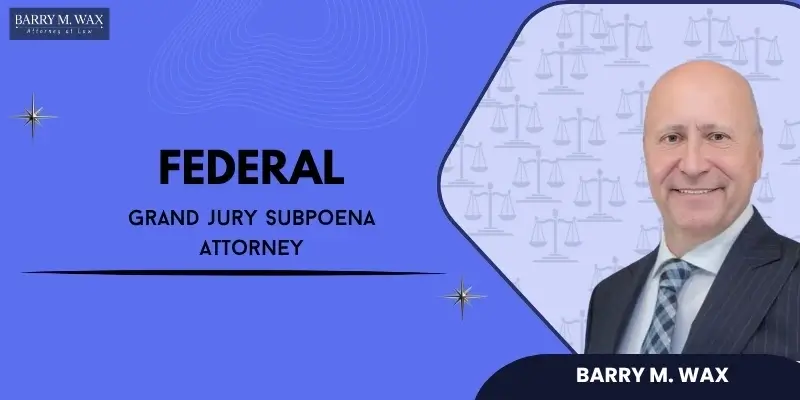
Barry M. Wax has practiced criminal defense since 1985 and represents clients in federal matters throughout the Southern District of Florida. His experience includes securing a Not Guilty verdict in a federal Medicare fraud jury trial, giving him firsthand insight into how federal prosecutors build a case and how an early, well-planned defense can matter before a case reaches an indictment.
The government has already started building its case. Make sure your defense starts just as early. Before you respond to a subpoena or produce a single document, contact our Miami federal grand jury subpoena attorney. We will help you understand where you stand, what comes next, and how to protect your future.
| AV Preeminent Since 2007 | Super Lawyers 2017–2026 | 40+ Years of Criminal Defense Experience | 5.0 Avvo Client Rating Across 19 Reviews |
Barry M. Wax has held Martindale-Hubbell’s AV Preeminent Rating, its highest peer-reviewed mark for legal ability and ethics, since 2007. He has been named a Super Lawyer for White Collar Criminal Defense every year since 2017, and clients have rated him 5.0 out of 5.0 across 19 reviews on Avvo.
The Return Date on Your Subpoena Is Real, and So Is What Happens If You Miss It
Every federal grand jury subpoena includes a return date, which is the deadline to appear, testify, or produce the requested documents. That deadline should never be ignored. Missing it can create additional legal complications and make an already serious situation more difficult to resolve.
Meeting the return date is only part of the process. How you respond can be just as important. Before taking any action, speak with our Miami federal grand jury subpoena attorney to protect your rights, understand your options, and avoid unnecessary mistakes.
One of the first things your attorney will determine is whether you are a witness, subject, or target of the investigation. The subpoena itself usually does not answer that question, but the distinction is important. The firm’s guide to the differences between a target, subject, and witness in a federal investigation provides additional context about these classifications.
- A witness generally has information the government wants.
- A subject is someone whose conduct falls within the scope of the investigation.
- A target is someone prosecutors believe they have substantial evidence linking to a crime and whom prosecutors may charge.
The documents you produce and the way you respond to the subpoena can influence how the investigation moves forward. Business records, emails, and text messages often become important evidence, which is why you should understand your legal position before providing information.
Early legal guidance can help you comply with the subpoena while protecting your interests throughout the process.
Speak with our Miami federal grand jury subpoena attorney today.
The Federal Grand Jury Subpoenas We Handle for Witnesses, Subjects, and Targets
A federal grand jury subpoena does not mean the same thing for everyone who receives one. Each situation requires a different strategy, and understanding where you stand is the first step in protecting your rights.
Barry M. Wax represents individuals, executives, and businesses throughout every stage of federal grand jury investigations in the Southern District of Florida, whether the subpoena involves testimony, documents, or both.
His experience includes handling:
- Subpoenas duces tecum requesting business records, bank statements, emails, and other documents
- Subpoenas ad testificandum requiring testimony before a federal grand jury
- Target letters issued alongside or instead of a subpoena
- Proffer sessions and voluntary interviews with federal agents or prosecutors
- Motions to quash or modify overly broad subpoenas
- Privilege-log preparation to protect attorney-client and work-product materials
- Corporate subpoenas involving businesses, executives, and employees
- Healthcare, financial, and tax-fraud investigations that begin with a records request
How Attorney Barry Wax Handles a Grand Jury Subpoena From the First Phone Call
When you receive a federal grand jury subpoena, the first steps matter. Barry helps you understand what the subpoena means, what your options are, and how to move forward while protecting your rights.
- We review the subpoena immediately. We confirm the return date, analyze what the government is requesting, and assess whether you appear to be a witness, subject, or target of the investigation.
- We communicate with federal prosecutors when appropriate. Barry has spent decades dealing with Assistant United States Attorneys in pre-indictment matters. He works to understand the investigation’s scope, address concerns, and determine the available path forward.
- We carefully review documents before they are produced. We identify potentially privileged materials and prepare privilege logs when necessary to protect attorney-client communications and attorney work product.
- We prepare you for any required testimony. If appearing before the grand jury becomes necessary, we explain the process, discuss what to expect, and prepare you for the types of questions prosecutors may ask.
- We work toward an appropriate resolution. Barry focuses on resolving investigations before they escalate when the facts and law permit, while providing honest guidance about your options at every stage.
Speak with our Miami federal grand jury subpoena attorney today.
Where Federal Grand Jury Matters Are Handled in Miami
Federal criminal matters involving Miami, Florida, are handled in the Southern District of Florida. The Wilkie D. Ferguson Jr. United States Courthouse is located at 400 North Miami Avenue, Miami, FL 33128.
The Southern District of Florida’s official courthouse directory identifies the Ferguson courthouse and the other federal courthouses in downtown Miami. Your subpoena should specify where and when you must appear or produce records, so review the document carefully rather than assuming which building or office applies.
The U.S. Attorney’s Office for the Southern District of Florida maintains its Miami office at 99 N.E. 4th Street. Federal investigations originating in Miami may involve witnesses, businesses, records, or alleged conduct from across South Florida.
Barry Wax has practiced criminal defense since 1985 and currently serves as a Director at Large for the Florida Association of Criminal Defense Lawyers statewide. His familiarity with federal practice in the Southern District of Florida informs how he communicates with prosecutors and prepares clients for grand jury proceedings.
The Federal Rule Behind Your Subpoena and the Charge That Can Follow a Wrong Move
A federal grand jury subpoena derives its authority from Rule 17 of the Federal Rules of Criminal Procedure. Rule 17 permits a subpoena to require testimony or the production of designated documents, data, records, and other objects. Failing to comply with a valid subpoena without a recognized legal basis can result in contempt proceedings.
For many people, the greatest risk is not receiving the subpoena itself but mishandling information after the request is made. Federal law prohibits knowingly destroying, altering, mutilating, or concealing records with the intent to impair their availability for use in an official proceeding.
Under 18 U.S.C. § 1512, certain conduct involving evidence preservation can result in separate criminal consequences.
If you possess emails, invoices, files, messages, or other records connected to a federal subpoena, seek legal guidance before deleting, modifying, organizing, or producing anything. This includes understanding how routine document-retention policies, automatic email deletion, messaging applications, or backup systems may affect potentially relevant information.
The firm’s discussion of why deleting texts, Slack messages, or WhatsApp chats can make a federal investigation worse explains why records should be preserved once an investigation or subpoena is known.
What Happens After You Comply With a Grand Jury Subpoena?
Complying with a subpoena is rarely the end of the story.
Prosecutors may follow a document production with a request for a proffer session or voluntary interview. A proffer session generally allows prosecutors and agents to ask questions under the terms of a written agreement, but the scope of any protection depends on the agreement’s language.
Some witnesses may receive immunity or assurances about their status before testifying, while others may be informed that they are not presently considered targets. These outcomes depend on the circumstances and should not be assumed from the subpoena alone.
Although you are not legally required to retain an attorney merely because you received a subpoena, having counsel advise you before responding can help you understand your rights, obligations, and possible exposure.
A poorly prepared proffer session can expose inconsistencies, omissions, or new information that changes how prosecutors view the person being interviewed. Once a statement has been made to federal agents or prosecutors, it generally cannot be taken back.
Our Miami federal grand jury subpoena attorney reviews what a proposed agreement protects and what it leaves exposed before you agree to participate. The firm’s step-by-step guide to federal grand jury proceedings explains how the investigation may move forward.
FAQs About Miami, FL Federal Grand Jury Subpoena Law
What does it mean if I received a federal grand jury subpoena in Miami?
It means a federal grand jury sitting in the Southern District of Florida wants your testimony, your documents, or both as part of an active criminal investigation. It does not automatically mean you are the person under investigation, although the government may also subpoena a subject or target.
Am I a witness, a subject, or a target?
The subpoena itself usually will not say. An attorney may be able to contact the Assistant United States Attorney handling the investigation to ask about your status, although prosecutors are not always required to provide a definitive answer. Your apparent status can affect how you respond.
Do I have to testify if I am subpoenaed?
Generally, you must comply with a valid subpoena unless a recognized privilege or other legal basis applies. The Fifth Amendment may allow you to decline to answer particular questions that could incriminate you, but it does not necessarily permit you to ignore the subpoena or refuse to appear.
Can I ignore the subpoena or ask for more time to respond?
You should not ignore a federal grand jury subpoena. An attorney may be able to negotiate the return date or the scope of the request with the prosecutor’s office, but any extension or modification should be confirmed rather than assumed.
Can the documents I produce be used against me later?
Potentially, yes. Business records, emails, messages, and other materials produced in response to a subpoena may become evidence in the investigation or a later criminal case. An attorney can review the requested materials for privilege and other legal issues before production.
What is a target letter, and how is it different from a subpoena?
A target letter generally informs you that prosecutors consider you a target of a federal investigation. A subpoena requires testimony, documents, or both but does not necessarily disclose whether the recipient is a witness, subject, or target. A target letter and subpoena may sometimes arrive together.
Does the Southern District of Florida cover more than Miami-Dade County?
Yes. The Southern District of Florida covers nine counties, including Miami-Dade, Broward, Monroe, and Palm Beach. A federal grand jury investigation handled in Miami may therefore involve witnesses, businesses, records, and alleged conduct from elsewhere in South Florida.
Can my business be subpoenaed even if it has not done anything wrong?
Yes. Prosecutors may subpoena a business because it possesses records connected to another person or company under investigation. Receiving a subpoena does not, by itself, establish that the business committed a crime.
How soon should I contact an attorney after being served?
You should seek legal guidance before responding, producing records, or speaking with investigators. Contacting an attorney promptly provides more time to review the subpoena, preserve records, assess privilege, and address the return date.
What if I already produced documents before contacting an attorney?
It is not necessarily too late to obtain help. An attorney can review what was produced, evaluate the remaining requests, identify potential exposure, and advise you about future communications with prosecutors or agents.
Will hiring an attorney make the government suspicious of me?
No. Prosecutors routinely communicate with attorneys representing witnesses, subjects, targets, and businesses in federal investigations. Seeking legal advice is not an admission of wrongdoing.
Talk to a Miami Federal Grand Jury Subpoena Attorney Before You Respond
A federal grand jury subpoena can leave you with more questions than answers.
What you do next matters, but you do not have to navigate the process alone.
Barry M. Wax has practiced criminal defense since 1985 and represents clients facing federal investigations in Miami. His experience includes securing a Not Guilty verdict in a federal fraud jury trial. He understands what is at stake and can help you make informed decisions from the beginning.
The Law Offices of Barry M. Wax represents witnesses, subjects, targets, executives, and businesses responding to federal subpoenas and investigations. Contact the firm for a confidential consultation before responding to the subpoena or producing requested materials.
Serving Miami and South Florida
When you are facing a federal investigation in Miami or elsewhere in South Florida, your freedom, career, professional reputation, and business interests may all be affected. The Law Offices of Barry M. Wax provides direct representation from an attorney who has practiced criminal defense since 1985 and personally handles the matters entrusted to the firm.
Based at 701 Brickell Avenue, Suite 1550, in Miami, the firm represents clients throughout Miami-Dade County and South Florida, including Brickell, Miami Beach, Aventura, Fort Lauderdale, Weston, Broward County, Monroe County, and Palm Beach County. Federal matters may proceed through the United States District Court for the Southern District of Florida.
The firm represents witnesses, subjects, targets, executives, licensed professionals, and businesses dealing with federal grand jury subpoenas, target letters, proffer requests, fraud investigations, healthcare investigations, conspiracy allegations, document productions, and related federal proceedings.
Miami, FL Federal Grand Jury Subpoena Law Additional Resources:
- Responding to a Grand Jury Subpoena
- What Is a Target Letter From a Prosecutor, and Should I Be Worried?
- Why Early Legal Representation Matters in Federal Investigations
- How to Know if You Are Under Federal Investigation
- Federal Criminal Laws and Penalties Explained
Law Offices of Barry M. Wax Office Location
Copyright © 2026 Law Offices of Barry M. Wax. All rights reserved.
Digital Marketing By 
*Images are obtained under license from Canva and other third-party stock image providers, with attribution included where required.